Session 55 — November 2019
Is his personal change only superficial? The sandbox of the mind's reality ▶ Play excerpt05:50

Frederic reviews the changes he has made over recent years and says they feel interesting but still superficial, and asks whether that perception is correct.
The Wonders confirm he has altered belief structures and psychologies and opened himself to new ideas, but is still stuck in his mind playing with them: as he opens, another part of him closes down and becomes more stubborn, leaving him oscillating.
There is a willingness to open and to see himself differently, but also fear of doing so because he does not know what it would mean.
Since he began speaking with them his life has changed substantially - he is now married with a child - and he fears that further change would make all of that leave, believing he must stay grounded in reality to enjoy the benefits of the choices he has made.
They tell him that groundedness in reality is only groundedness in the reality of his mind's illusions: the mind treats work, marriage, children, sickness and death as inevitabilities.
He plays with constructs - he can be wealthy rather than poor, he need not work hard, he can have children without making them - but he is still playing inside the same sandbox, afraid that outside it he would not know what to do and could never get back in.
They say that if he explored that fear he might choose to step outside, and would then discover he could return to the sandbox whenever he chose and could explore ideas not rooted in the sandbox's reality.
Frederic illustrates with money: raising a salary by 10 or 20 percent is easy, but multiplying it by 10 or 100 requires a complete paradigm shift.
The Wonders point out that to multiply it a hundredfold he would have to play by the sandbox's rules, not his own, and that by insisting on his own rules he restricts himself to small increments - though they add there is nothing wrong with small increments.
Contraction into the physical and the habit of 'I can't' ▶ Play excerpt06:04
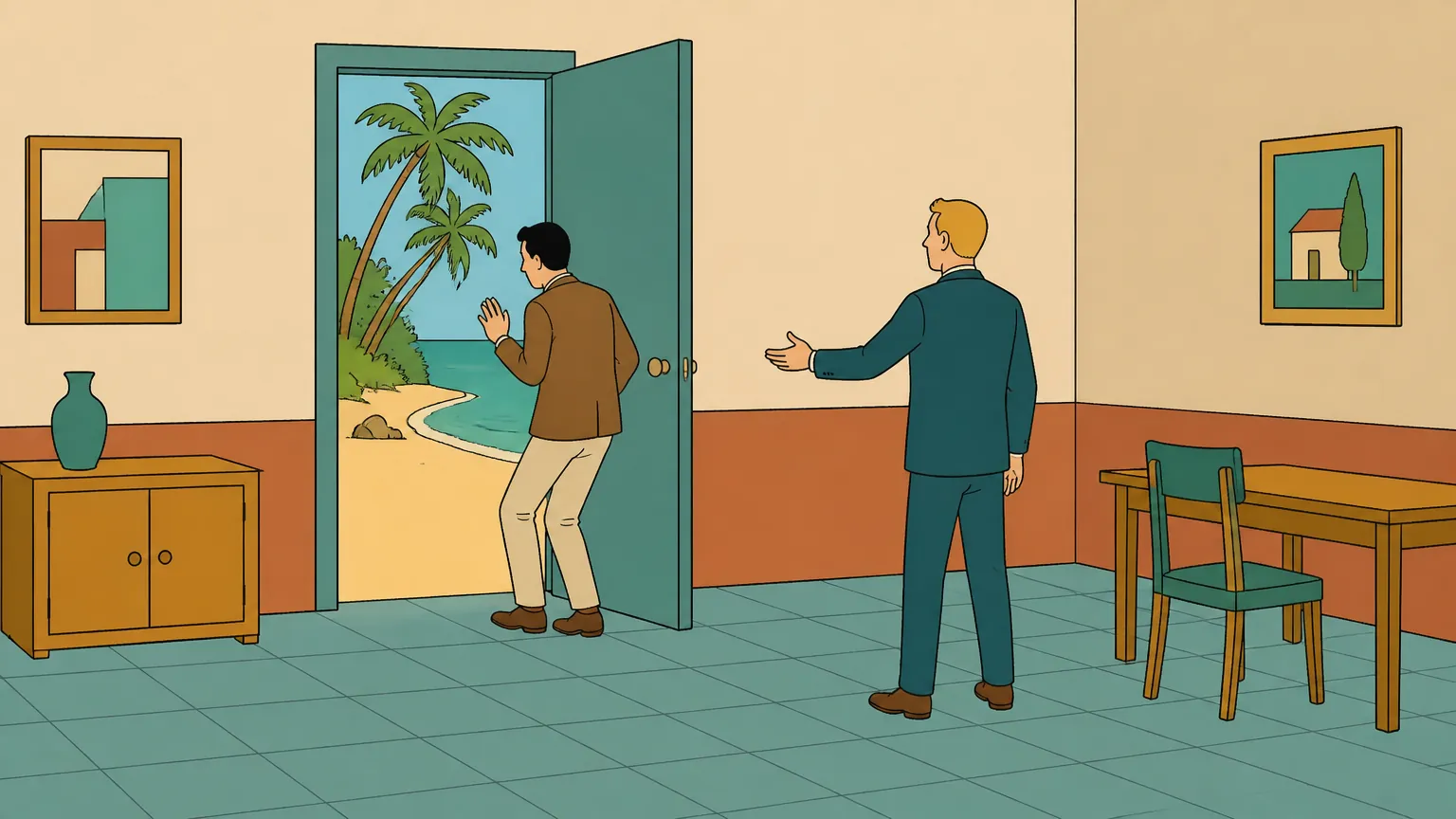
The Wonders ask what Frederic would choose if he could choose absolutely anything without fear, judgment or guilt.
He answers that his desires are currently very much linked to the physical, such as travelling more, and describes swinging between the physical and the spiritual.
They warn that staying in the physical has one guaranteed direction: energy and awareness contract, and although he may think he is expanding because he can do more physically, he is actually doing more with less.
When he asks whether the idea is not to do both, they reply that there is no such thing as an idea or a necessity to do something - that is precisely what they have been exploring with him.
They then ask how often he says 'I can't', 'I won't', 'I shouldn't', 'I mustn't' versus 'I can', noting these are contractive statements that shrink his energy until he believes the only things possible are those within the framework of 'I can't'.
As a demonstration they invite him to a retreat in Mexico, predicting he will refuse instantly; he replies that he can but does not want to, and they point out that 'I won't' and 'I can't' are the same thing - convincing himself he is making a choice when it is really a desire to contract.
They ask whether it should matter where in the world a retreat is held, even underwater, since the real question is whether he chooses to attend; Frederic concedes that at this stage the location still matters to him.
They mention completed series on spirituality and upcoming study groups oriented toward the 'I can' rather than the 'I can't', and suggest that until the next conversation he observe how quickly he moves from 'I can' to 'I can't', how easily he justifies staying there, and how hard it is to move and remain in the expansive position.
Frederic agrees that the contractive position is far more comfortable.
Experiencing emotions versus thinking about them ▶ Play excerpt05:44
Frederic says he has been experiencing emotions rather than looking at them, and has found it simple as long as he just experiences it; the moment he thinks about it, it becomes complicated and he separates from it.
The Wonders remark that everything ever thought about has been written into a book, but nothing ever experienced can be written.
Asked whether a technology could ever transfer experience from one mind to another, they answer no - only the idea can be transferred, never the experience; a book about emotions conveys an idea or construct but not the actual emotion, which is precisely the benefit of experiencing.
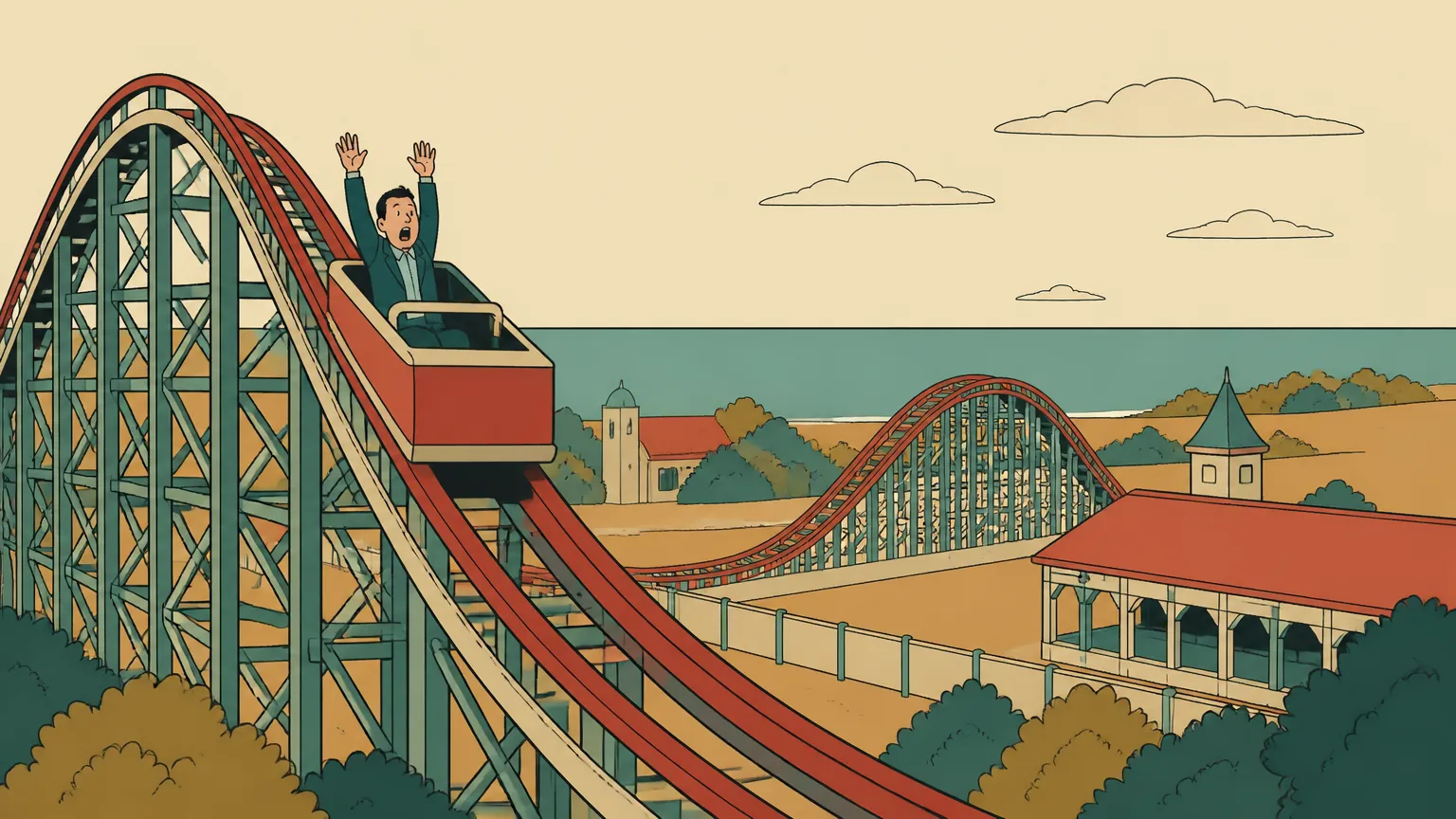
When they ask how he feels about experiencing emotion, he cannot describe it; they offer 'scary' and 'like going down a roller coaster with no brakes' as ideas, then press him for his own, and he settles on foreign and unfamiliar.
They explain it is unfamiliar because his mind has not yet justified and judged it, and when he protests that justifying it would not be useful, they note his mind is nonetheless trying desperately to do so.
They close by telling him to enjoy the ride, since all roller coasters return to the same point however scary they are - he may yell, scream, dance or sing, but he will always arrive back at the same point - and leave him to work out what that point is as a subject for the next conversation.
In the post-session reflection the channel recounts being petrified of roller coasters until the day he screamed his head off through the whole ride at Canada's Wonderland, ending up laughing and crying and describing the total loss of control as the greatest experience.