Session 56 — December 2019
The 'I can / I can't' exercise and the physical as illusion ▶ Play excerpt04:44
Frederic reports on the suggested exploration of 'I can' and 'I can't', finding many habits he can easily switch, with what remains stuck in the 'I can't' being physical - travelling back in time, morphing into another person - though he has already converted a vast number of former 'I can'ts'.
He asks whether the aim is ultimately to see the physical too as an illusion, noting that even people considered enlightened may have moments of transcending the physical but remain stuck in it.
The Wonders reply that his 'I can't' about time travel or entering another's body comes from the mind's perspective on how things work, and that moving past 'I can't' reveals that the mind's perspective is not the only one available.
Perhaps, they suggest, the enlightened do not do such things because they realize it is merely a choice available at any time, and that the mind requires a certain satisfaction while the self sees things differently.
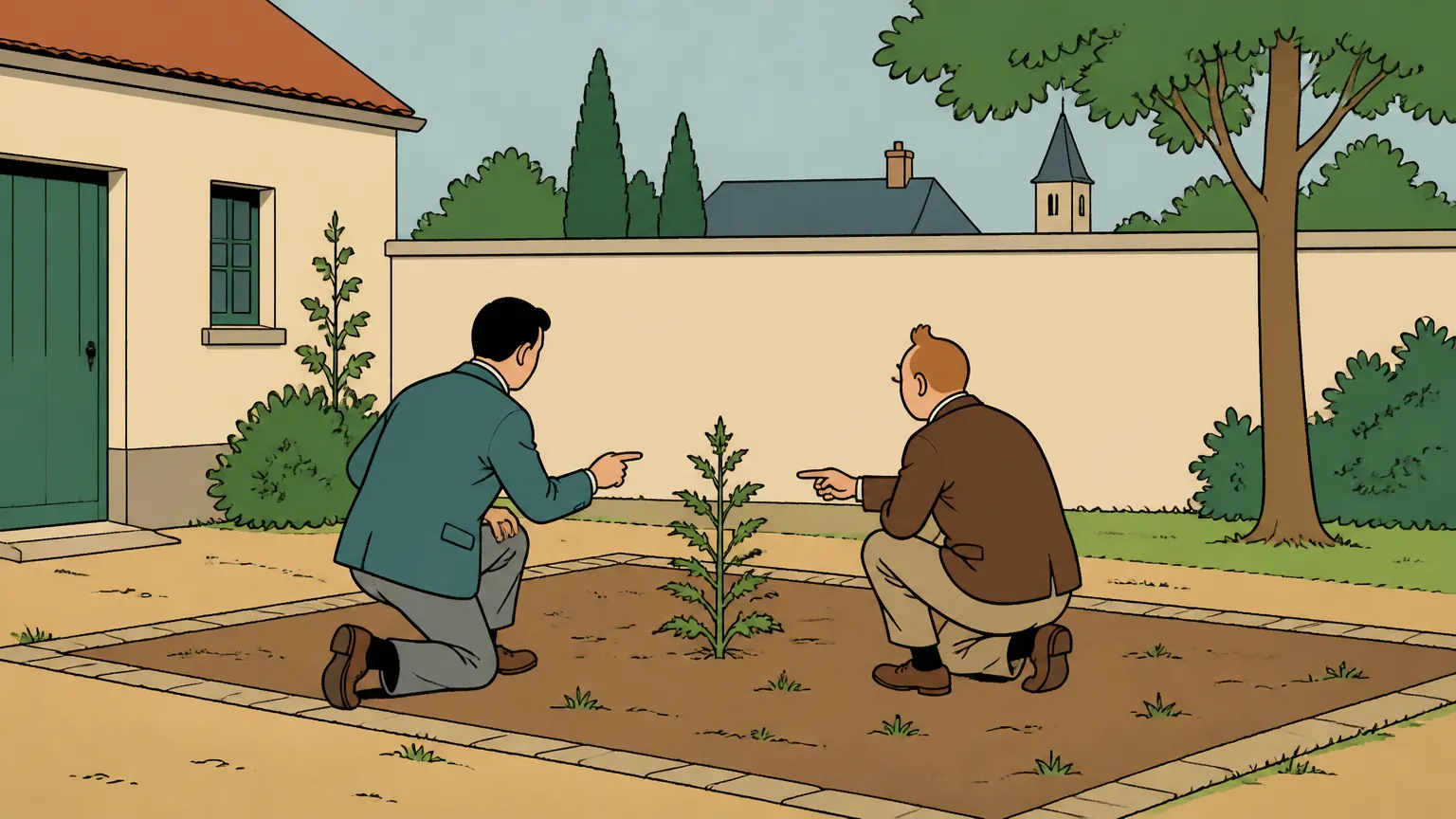
They give the example of a tree: what one person's mind has decided is a tree another may see as a weed, and asked to call it a weed one says 'I can't, it's a tree' - as long as the mind defines it that way it stays that way.
They then ask why he confined the exploration to the physical.
Frederic answers that he tried to look at as many perspectives as he could but, as usual when he pushes past his current limits, ended up with a cold that brought him back to the physical - a pattern he recognizes.
The Wonders encourage him to continue the exploration and, even when a physical reaction (which is a fear reaction) occurs, to keep going past the illusion of physicality and the mind's attachment to the idea that all things end in the physical.
Fears of the mind versus fears of the self, and choices rooted in fear, judgment and guilt ▶ Play excerpt07:13
Frederic recalls an old distinction between the fear of the mind and the fear of the self and says he cannot tell which fears come from the self.
The Wonders assure him that all the fears he has explored so far belong to his mind and consequently his ego; the fears of the self are so broad that the mind cannot observe them on its own and the mind must be suspended to see them.
Their suggestion is to expand his self-awareness and realize how limited the mind is: it does not observe its own energetic component, seeing only the judgment, justification, fear and guilt attached to its choices, and judging from those same perspectives, so that every choice and thought it makes stands in relation to fear, judgment and guilt.
Realizing this allows him to help the mind move past choosing from that basis to choosing out of love, appreciation, expansion and awareness, which opens him to the energetic component of each choice - unreachable until he sees there is more than fear, judgment and guilt.
They warn that he may hold this as a mental concept while his actual choices are still made from fear, judgment and guilt, and that until he suspends that attachment, recognizes it as contracting his exploration of existence, and chooses from something else, he will continue to think in those terms and will be unable to conceive of transcending physicality, entering another's body or moving through time and space except as nice constructs requiring machinery.
When Frederic claims to have sometimes chosen from love and offers the example of the original choice to come to Earth and go through these experiences, they accept that first original choice - noting Catholics call it original sin - but ask what other choice he has made from love.
His answer, choosing to expand in spite of fear, they identify as still fear-driven: it was the fear of not being able to expand that propelled the choice.
They clarify that love is not absent from his choices, but the motivator or originator of the choice still lies in the mind, where all choices must originate from fear, judgment or guilt - the decision to expand his mind began with judgment, carried a fear component ('if I don't change I won't get where I want to go') and a guilt component ('I've been giving in to my fear all this time, I have to do something else').
Whether the mind really makes the choices, and the subtle energetic component ▶ Play excerpt06:52
Frederic suggests that one of the mind's fears is discovering that it is not actually the one making choices, giving the example of how he ends up in work situations where he does not have to work much - which does not seem to be chosen by the mind since it feels unconscious or subconscious.
The Wonders say the mind does make most of the choices of daily life and is still doing the choosing here, but that an energetic component is also at play.
They explain that his mind has pre-judged and pre-justified the constructs that attract such opportunities, so it is willing to see an opportunity others would not see - seeing the tree where others see weeds - while an energetic component brought that opportunity about.
Asked whether the goal is to get rid of the mind as a tool, they answer emphatically no: it is one of the most amazing things he has and it allows him to navigate the construct of third dimensional reality.
They correct the notion that the energetic component moves the mind to choose - rather, there is an energetic component within the choice the mind makes.
Using his example, the mind decides it does not want to work hard, therefore looks only for companies wanting his services without hard work and does not see the opportunities involving work, making the choices out of fear of having to work and the judgment that a low-effort position is good; but within that there is also an energetic self-perspective saying to choose lovingly for oneself, and that energetic component shapes what the mind observes.
This component, they say, is so subtle that the mind cannot observe it.
They close by suggesting he continue reflecting on the 'I can't' and the 'I can', which will open this conversation up further for their next discussion.
In the post-session reflection the channel describes seeing Frederic-the-Mind complaining to Frederic-the-Self that it does all the work while the Self sits around doing nothing, with the Self repeatedly answering only 'interesting perspective', and finally 'I can't, and I can'.