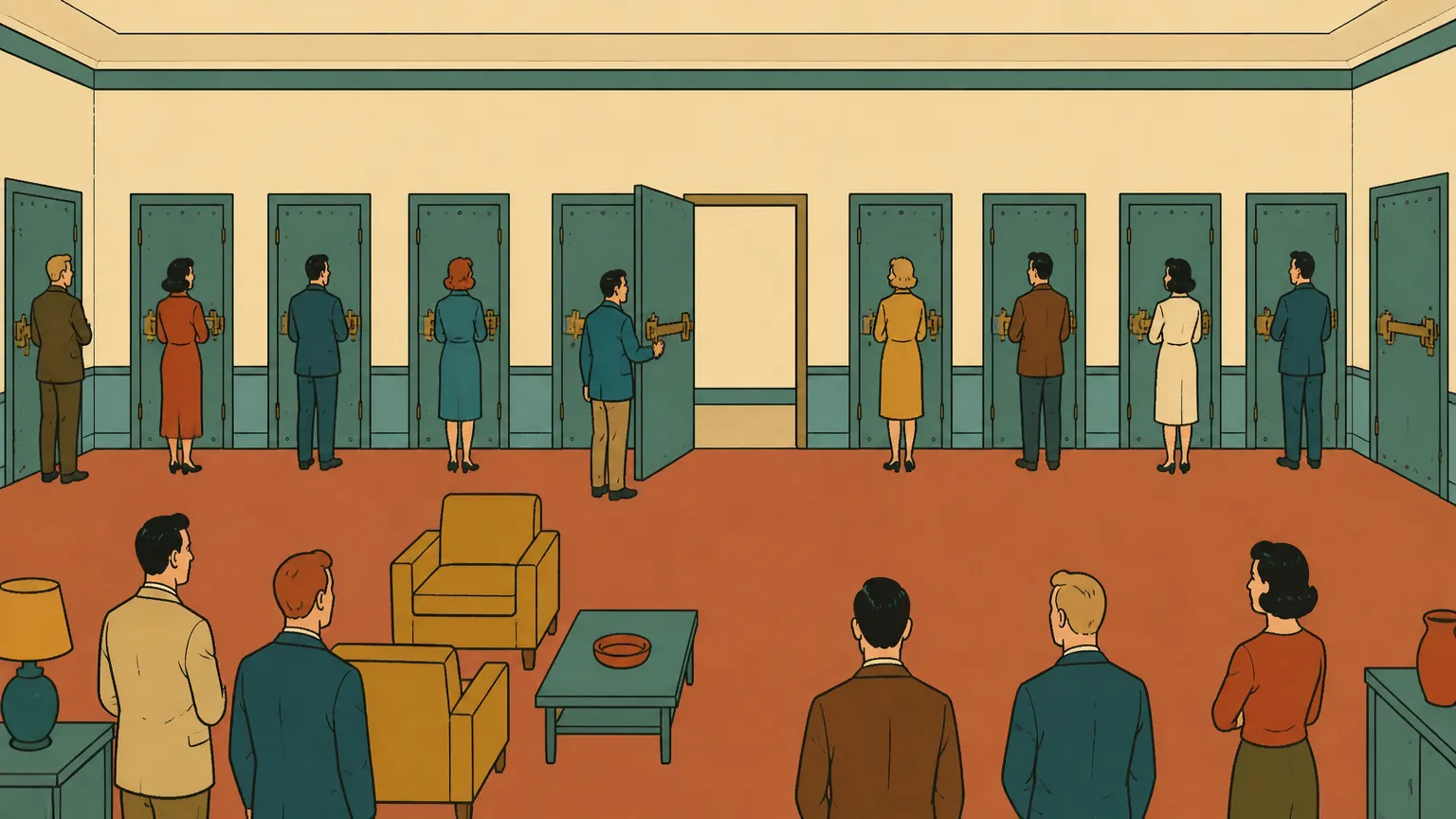

Would humanity be better off without thinking? The mind as a survival tool
Frederic reports having spent time on the difference between judgment and love, concluding that removing judgment amounts to including more, even the parts of himself he dislikes, and then asks whether humanity would be better off without thinking.
The Wonders answer no: thinking plays an important role, allowing humans to develop circumstances that propel them forward, sometimes through fear, judgment and guilt and other times through love.
To ask whether humanity would be better without thinking is to ask whether it would be better without a mind, and the mind is what allows humans to navigate and survive third dimensional reality.
The difficulty is that minds are fearful of separation and survival from the moment of creation and build a reactionary muscle to protect themselves, which grows more reactionary and fearful with time; eventually people learn that fear is not all it is made out to be and that they can survive, but most abdicate the self-responsibility to command the mind, at which point the mind takes over and they spend 60 to 100 years being afraid and reacting to fear while surviving in spite of it.
The alternative is to command the mind and show it that fear is an illusion, so that its judgment - which has great benefit - is used in a positive, loving way with the support and guidance of the self.
Then thinking can create the ability to navigate interdimensional reality, expressions of love and appreciation, expansion, and governments and a world that explore the universe lovingly rather than defensively.
The mind, they conclude, is a very important tool but only a tool, and most of humanity has forgotten this; humans' stubbornness has let them survive in spite of themselves but has also created the illusion that the mind is all there is.