The inherited belief that knowledge must be complete
Frederic says one of his psychologies is that he cannot teach while still learning, since what he would teach would not be absolute or complete.
The Wonders ask whether he could not simply teach the steps he has taken and let others move on from there, since he is responsible only for imparting knowledge, not for others' success or failure.
When he says he does not see the value in incomplete knowledge, they tell him he sounds like his father: the idea that knowledge must be complete is a psychology and belief structure absorbed from his environment, specifically from his father, not something genetic.
They tell him not to sell himself short, that he has real insights into himself, his relationships with everything around him and the universe, leading to interesting questions and greater insights, but never to what he considers complete knowledge, because complete knowledge can never truly be gained.
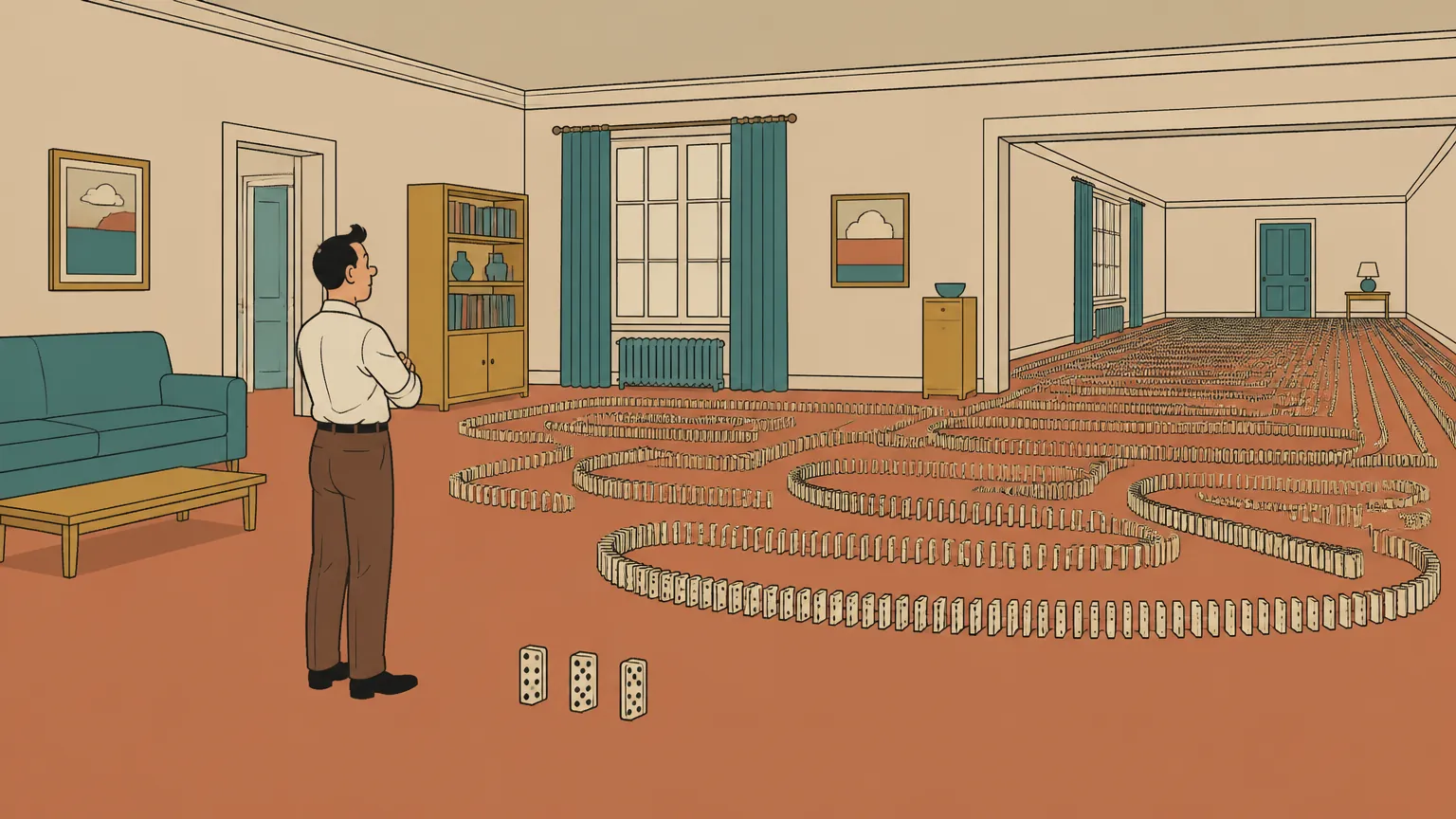
His difficulty is expecting that A plus B equals C and that this is the end, rather than seeing that C leads to D, D to E and so on.
They affirm he has changed substantially, smoothed his rough edges, and become more willing to enjoy who he is and allow himself not to be perfect, and urge him to ask the questions he does not want to ask, going into the areas of himself that are uncomfortable or uncertain, even without knowing where they lead.